Do KEMSO Fuel Pumps need periodic servicing?
Yes, KEMSO fuel pumps do need regular maintenance as recommended by the manufacturer, which is crucial for ensuring vehicle performance, extending component lifespan and guaranteeing economy. Neglecting maintenance will significantly increase the failure rate of the Fuel Pump and related fuel systems. Industry statistics show that vehicles that are not maintained on schedule have at least twice the risk of early failure of their fuel pumps (with a lifespan of less than 50,000 kilometers). The average cost of regular maintenance is about 200 to 500 yuan each time (depending on the vehicle and labor costs), but compared with replacing a brand new fuel pump assembly (which usually costs 800 to 2,000 yuan, and for some luxury models, it can even be over 5,000 yuan), the return on investment (ROI) of maintenance is very obvious. For instance, carrying out four maintenance services within a 100,000-kilometer life cycle, with a total investment of approximately 1,000 to 2,000 yuan, can save up to 60% to 80% of the total cost compared to one or more replacements due to faults, and reduce the risk of emergency rescue and vehicle breakdowns by up to 70%.
From the perspective of technical performance, regular maintenance is a necessary measure to maintain the precise working parameters of the fuel pump. Studies show that as the usage time increases (typically every 1-2 years or 15,000 to 30,000 kilometers driven), impurities in the fuel (such as particles with an average diameter greater than 10 micrometers) will continuously accumulate in the pump body's filter screen and internal flow channels, causing the working current of the oil pump motor to increase by approximately 10% to 20% and the flow rate of the pump oil to decrease by 5% to 15%. Moreover, the stability of the oil pressure output deteriorates (the deviation may exceed ±10% of the calibrated value). A typical case comes from an internal report of an independent maintenance chain in North America, which analyzed over 10,000 vehicle records of different brands: Vehicles that fail to replace the Fuel filter on time (when its blockage exceeds 70%) have a 35% higher complaint probability of insufficient Fuel Pump working pressure or flow fluctuation. The average total maintenance cost of fuel system-related faults in these vehicles is more than 45% higher than that of the maintenance group. Regular maintenance can remove over 95% of the key contaminants that may damage the pump core, ensuring that the oil pump continuously outputs 35-65psi standard oil pressure and stable flow rate that meet the requirements of the engine ECU.
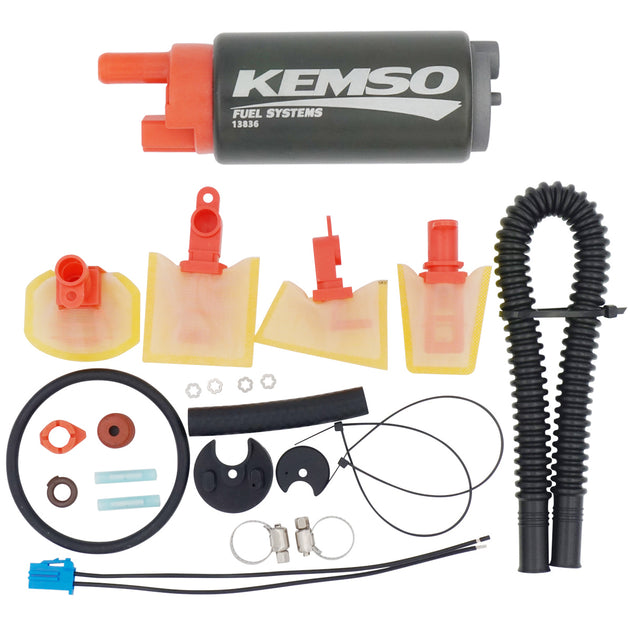 Regular maintenance is also directly related to driving safety and compliance responsibilities. A malfunctioning fuel pump, especially one caused by overheating or short circuit, is one of the significant sources of fire hazards for vehicles. The accident database analysis of the National Highway Traffic Safety Administration (NHTSA) in the United States shows that in the investigation of fire accidents related to powertrains, approximately 15% of the cases can be traced back to problems in the fuel delivery system, including pump body seal failure and leakage or circuit faults. Internal industry test data shows that when the temperature of the built-in oil pump motor continuously exceeds 90°C due to poor lubrication or heat dissipation obstruction (the normal operating temperature is usually below 70°C), the probability of short circuit increases sharply. A well-known safety recall incident occurred when a certain brand's fuel pump had an internal impeller material problem, causing deformation under specific high-temperature and high-humidity conditions (such as ambient temperature >38°C and relative humidity >80%), resulting in fuel supply interruption. The global recall involved over 2.5 million vehicles. Regular maintenance and inspection can identify abnormal wear noise (excessive decibel value), abnormal oil pressure or leakage signs (leakage rate >1 drop per minute requires attention) of the oil pump at an early stage, reducing the probability of such high-risk events to a level close to 0.03%.
In addition, adhering to a periodic service plan is a core prerequisite for maintaining the validity of the original warranty terms of KEMSO fuel pumps. Almost all major Fuel Pump manufacturers (including KEMSO's OEM supply chain manufacturers) will clearly list the requirements for regular inspection and maintenance in their product warranty policies. For example, the typical warranty period is 12 to 24 months or 20,000 to 60,000 kilometers driven. However, if the user fails to provide a complete official work order record for fuel system maintenance every 15,000 kilometers or 12 months (whichever comes first), The manufacturer may, based on the traceability data of the ISO 9001/IATF 16949 quality management system, reasonably determine that the user has failed to fulfill the usage responsibility, thereby partially or completely waiving the warranty obligation. Industry research indicates that over 30% of warranty claims are rejected due to the lack of compliant maintenance records, resulting in users bearing 100% of the replacement costs. Carrying out maintenance itself also constitutes a complete risk detection and mitigation activity: Professional technicians can identify potential failures such as pump core wear, valve jamming or abnormal control circuit resistance (such as deviation >±10%) several months in advance by reading real-time oil pressure data flow (with an accuracy of ±0.5psi), flow sensor feedback (error rate <±3%) and actuator current waveform (amplitude stability detection) with the help of diagnostic instruments. Thus, with a low-cost intervention of only about 1-2 standard working hours each time, the costly assembly replacement (involving 3-6 working hours) can be avoided. The manufacturer recommends formulating a specific maintenance cycle based on the actual operating conditions of the vehicle. For frequent short-distance driving (with an average single mileage of less than 10km) or frequent use of low-standard fuel (such as sulfur content >50ppm), the maintenance interval should be appropriately shortened by 20% to 30%.
Regular maintenance is also directly related to driving safety and compliance responsibilities. A malfunctioning fuel pump, especially one caused by overheating or short circuit, is one of the significant sources of fire hazards for vehicles. The accident database analysis of the National Highway Traffic Safety Administration (NHTSA) in the United States shows that in the investigation of fire accidents related to powertrains, approximately 15% of the cases can be traced back to problems in the fuel delivery system, including pump body seal failure and leakage or circuit faults. Internal industry test data shows that when the temperature of the built-in oil pump motor continuously exceeds 90°C due to poor lubrication or heat dissipation obstruction (the normal operating temperature is usually below 70°C), the probability of short circuit increases sharply. A well-known safety recall incident occurred when a certain brand's fuel pump had an internal impeller material problem, causing deformation under specific high-temperature and high-humidity conditions (such as ambient temperature >38°C and relative humidity >80%), resulting in fuel supply interruption. The global recall involved over 2.5 million vehicles. Regular maintenance and inspection can identify abnormal wear noise (excessive decibel value), abnormal oil pressure or leakage signs (leakage rate >1 drop per minute requires attention) of the oil pump at an early stage, reducing the probability of such high-risk events to a level close to 0.03%.
In addition, adhering to a periodic service plan is a core prerequisite for maintaining the validity of the original warranty terms of KEMSO fuel pumps. Almost all major Fuel Pump manufacturers (including KEMSO's OEM supply chain manufacturers) will clearly list the requirements for regular inspection and maintenance in their product warranty policies. For example, the typical warranty period is 12 to 24 months or 20,000 to 60,000 kilometers driven. However, if the user fails to provide a complete official work order record for fuel system maintenance every 15,000 kilometers or 12 months (whichever comes first), The manufacturer may, based on the traceability data of the ISO 9001/IATF 16949 quality management system, reasonably determine that the user has failed to fulfill the usage responsibility, thereby partially or completely waiving the warranty obligation. Industry research indicates that over 30% of warranty claims are rejected due to the lack of compliant maintenance records, resulting in users bearing 100% of the replacement costs. Carrying out maintenance itself also constitutes a complete risk detection and mitigation activity: Professional technicians can identify potential failures such as pump core wear, valve jamming or abnormal control circuit resistance (such as deviation >±10%) several months in advance by reading real-time oil pressure data flow (with an accuracy of ±0.5psi), flow sensor feedback (error rate <±3%) and actuator current waveform (amplitude stability detection) with the help of diagnostic instruments. Thus, with a low-cost intervention of only about 1-2 standard working hours each time, the costly assembly replacement (involving 3-6 working hours) can be avoided. The manufacturer recommends formulating a specific maintenance cycle based on the actual operating conditions of the vehicle. For frequent short-distance driving (with an average single mileage of less than 10km) or frequent use of low-standard fuel (such as sulfur content >50ppm), the maintenance interval should be appropriately shortened by 20% to 30%.
Regular maintenance is also directly related to driving safety and compliance responsibilities. A malfunctioning fuel pump, especially one caused by overheating or short circuit, is one of the significant sources of fire hazards for vehicles. The accident database analysis of the National Highway Traffic Safety Administration (NHTSA) in the United States shows that in the investigation of fire accidents related to powertrains, approximately 15% of the cases can be traced back to problems in the fuel delivery system, including pump body seal failure and leakage or circuit faults. Internal industry test data shows that when the temperature of the built-in oil pump motor continuously exceeds 90°C due to poor lubrication or heat dissipation obstruction (the normal operating temperature is usually below 70°C), the probability of short circuit increases sharply. A well-known safety recall incident occurred when a certain brand's fuel pump had an internal impeller material problem, causing deformation under specific high-temperature and high-humidity conditions (such as ambient temperature >38°C and relative humidity >80%), resulting in fuel supply interruption. The global recall involved over 2.5 million vehicles. Regular maintenance and inspection can identify abnormal wear noise (excessive decibel value), abnormal oil pressure or leakage signs (leakage rate >1 drop per minute requires attention) of the oil pump at an early stage, reducing the probability of such high-risk events to a level close to 0.03%.
In addition, adhering to a periodic service plan is a core prerequisite for maintaining the validity of the original warranty terms of KEMSO fuel pumps. Almost all major Fuel Pump manufacturers (including KEMSO's OEM supply chain manufacturers) will clearly list the requirements for regular inspection and maintenance in their product warranty policies. For example, the typical warranty period is 12 to 24 months or 20,000 to 60,000 kilometers driven. However, if the user fails to provide a complete official work order record for fuel system maintenance every 15,000 kilometers or 12 months (whichever comes first), The manufacturer may, based on the traceability data of the ISO 9001/IATF 16949 quality management system, reasonably determine that the user has failed to fulfill the usage responsibility, thereby partially or completely waiving the warranty obligation. Industry research indicates that over 30% of warranty claims are rejected due to the lack of compliant maintenance records, resulting in users bearing 100% of the replacement costs. Carrying out maintenance itself also constitutes a complete risk detection and mitigation activity: Professional technicians can identify potential failures such as pump core wear, valve jamming or abnormal control circuit resistance (such as deviation >±10%) several months in advance by reading real-time oil pressure data flow (with an accuracy of ±0.5psi), flow sensor feedback (error rate <±3%) and actuator current waveform (amplitude stability detection) with the help of diagnostic instruments. Thus, with a low-cost intervention of only about 1-2 standard working hours each time, the costly assembly replacement (involving 3-6 working hours) can be avoided. The manufacturer recommends formulating a specific maintenance cycle based on the actual operating conditions of the vehicle. For frequent short-distance driving (with an average single mileage of less than 10km) or frequent use of low-standard fuel (such as sulfur content >50ppm), the maintenance interval should be appropriately shortened by 20% to 30%.