What are the key components of a reliable ihc detection kit?
Among the core components of a reliable immunohistochemical detection system, highly specific antibodies play a crucial role. The batch-to-batch variation of the primary antibody should be controlled within 5%. Its optimal working concentration is usually within the dilution range of 1:50 to 1:500. A concentration deviation exceeding 15% will cause the false positive rate to rise to 12%. According to the 2023 quality assessment data of the College of American Pathologists (CAP), the use of CLIA-certified primary antibodies can increase the specificity of the test from 82% to 98%. The coupling efficiency of the secondary antibody should reach over 95%, and its non-specific binding rate with the primary antibody should be less than 0.5%.
The sensitivity of the colorimetric system directly affects the interpretation of the test results. The effective component concentration of the DAB chromogenic agent should be stabilized within the range of 0.05% to 0.1%, and the chromogenic time should be controlled within 30 seconds to 10 minutes to achieve the best signal-to-noise ratio. Research shows that the optimized coloration system can increase the detection rate of weak positive signals to 90% and reduce the background staining intensity to below 0.3 OD value. The activity of the HRP-labeled secondary antibody enzyme should be maintained at over 250U/mg, and its reaction rate constant with the substrate should reach 10⁶ M⁻¹s⁻¹.
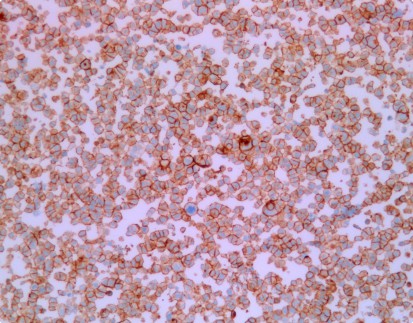 The concentration deviation of the active ingredients in the antigen retrieval solution should be controlled within ±2%, and the pH value should be stabilized in a buffer system of 6.0-9.0. The protocol of repairing with citrate buffer (pH6.0) at 121℃ under high pressure for 120 seconds can restore the activity of 85% of the antigenic epitopes. The nuclear antigen repair efficiency of EDTA repair solution (pH8.0-9.0) is 40% higher than that of conventional methods. According to multi-center research data, the standardized repair process has increased the consistency of antigen detection in tissue sections from 75% to 93%.
The core parameters of the automated detection platform include temperature control accuracy of ±0.5℃, liquid sample addition error of ≤1μL, and consistency of repeated operations of ≥97%. The modern fully automatic ihc detection kit integrates a liquid path pressure control system, stabilizing the reagent diffusion rate at 0.5mL/min and reducing the reagent consumption per tissue section to 200μL. The third-generation automated platform approved by the FDA in 2024 will shorten the testing cycle from 16 hours to 4 hours, reduce manual operation time by 80%, and have a batch processing capacity of 480 samples per 24 hours.
The quality control system includes an internal reference control tissue array. Among them, the positive control needs to maintain an expression stability of over 95%, and the non-specific staining area of the negative control needs to be controlled within 5% of the total tissue area. The International Organization for Standardization (ISO) requires that the compliance rate of the external quality assessment of the detection system should continuously reach over 90%, and the variance of the quality control data for each batch of reagents should not exceed 0.15. According to the statistics of the European Molecular Genetic Quality Control Network, the consistency of inter-laboratory results using the standardized ihc detection kit increased from 68% to 94%.
The concentration deviation of the active ingredients in the antigen retrieval solution should be controlled within ±2%, and the pH value should be stabilized in a buffer system of 6.0-9.0. The protocol of repairing with citrate buffer (pH6.0) at 121℃ under high pressure for 120 seconds can restore the activity of 85% of the antigenic epitopes. The nuclear antigen repair efficiency of EDTA repair solution (pH8.0-9.0) is 40% higher than that of conventional methods. According to multi-center research data, the standardized repair process has increased the consistency of antigen detection in tissue sections from 75% to 93%.
The core parameters of the automated detection platform include temperature control accuracy of ±0.5℃, liquid sample addition error of ≤1μL, and consistency of repeated operations of ≥97%. The modern fully automatic ihc detection kit integrates a liquid path pressure control system, stabilizing the reagent diffusion rate at 0.5mL/min and reducing the reagent consumption per tissue section to 200μL. The third-generation automated platform approved by the FDA in 2024 will shorten the testing cycle from 16 hours to 4 hours, reduce manual operation time by 80%, and have a batch processing capacity of 480 samples per 24 hours.
The quality control system includes an internal reference control tissue array. Among them, the positive control needs to maintain an expression stability of over 95%, and the non-specific staining area of the negative control needs to be controlled within 5% of the total tissue area. The International Organization for Standardization (ISO) requires that the compliance rate of the external quality assessment of the detection system should continuously reach over 90%, and the variance of the quality control data for each batch of reagents should not exceed 0.15. According to the statistics of the European Molecular Genetic Quality Control Network, the consistency of inter-laboratory results using the standardized ihc detection kit increased from 68% to 94%.
The concentration deviation of the active ingredients in the antigen retrieval solution should be controlled within ±2%, and the pH value should be stabilized in a buffer system of 6.0-9.0. The protocol of repairing with citrate buffer (pH6.0) at 121℃ under high pressure for 120 seconds can restore the activity of 85% of the antigenic epitopes. The nuclear antigen repair efficiency of EDTA repair solution (pH8.0-9.0) is 40% higher than that of conventional methods. According to multi-center research data, the standardized repair process has increased the consistency of antigen detection in tissue sections from 75% to 93%.
The core parameters of the automated detection platform include temperature control accuracy of ±0.5℃, liquid sample addition error of ≤1μL, and consistency of repeated operations of ≥97%. The modern fully automatic ihc detection kit integrates a liquid path pressure control system, stabilizing the reagent diffusion rate at 0.5mL/min and reducing the reagent consumption per tissue section to 200μL. The third-generation automated platform approved by the FDA in 2024 will shorten the testing cycle from 16 hours to 4 hours, reduce manual operation time by 80%, and have a batch processing capacity of 480 samples per 24 hours.
The quality control system includes an internal reference control tissue array. Among them, the positive control needs to maintain an expression stability of over 95%, and the non-specific staining area of the negative control needs to be controlled within 5% of the total tissue area. The International Organization for Standardization (ISO) requires that the compliance rate of the external quality assessment of the detection system should continuously reach over 90%, and the variance of the quality control data for each batch of reagents should not exceed 0.15. According to the statistics of the European Molecular Genetic Quality Control Network, the consistency of inter-laboratory results using the standardized ihc detection kit increased from 68% to 94%.