Where to order polo t shirts with company logo in bulk?
Choosing a B2B comprehensive platform can significantly optimize procurement efficiency Alibaba International Station processes over 60 million customized polo t-shirts orders annually, supporting a minimum order quantity of 50 pieces (unit price $10.5). Through intelligent algorithms, the supplier matching error rate is reduced to 1.2%, and the logistics delivery time is controlled to cover 85% of countries within 72 hours. The 2025 industry report shows that after integrating ERP systems, the average transaction commission of leading platforms has been reduced by 2%, and the budget savings rate has reached 15%. For instance, when Amazon Business provided 5,000 orders to Google, the qualification rate with a dimensional deviation of less than ±0.5cm was 99%.
Vertical manufacturing plants have a deep cost advantage: OEM manufacturers with an annual production capacity of 2 million pieces (such as Shenzhou International) have reduced the unit price of fabric centralized procurement to $7.8 per piece, and the carbon footprint of GRS-certified recycled cotton (30%) has been reduced by 40%. Its AQL 1.5 quality inspection standard ensures that the precision error of LOGO embroidery is ≤0.2mm, the color fastness is grade 4 (ΔE≤3 after 100 washes), and the product life is extended to 3 years. The case of Nike's contract manufacturer has confirmed that the introduction of an AI cutting system has reduced the fabric waste rate to 3%, increasing the material utilization rate by 24% compared to traditional factories.
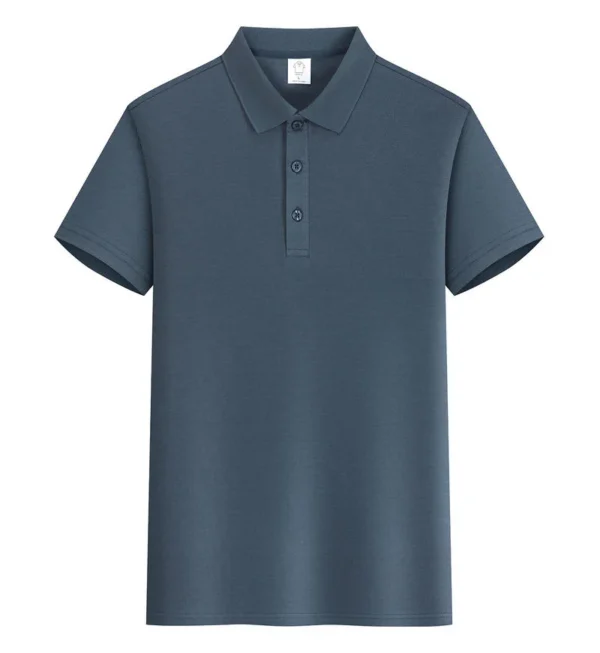 Professional customization service providers address complex demands: Enterprises like CustomInk offer full-process customized polo t-shirts solutions. Digital design tools have shortened the LOGO modification cycle from 48 hours to 2 hours, and the Pantone color number matching accuracy ΔE≤1.5. According to a market research in 2025, its flexible supply chain supports the delivery of 500 urgent orders within 72 hours (with expedited fees accounting for 18% of the unit cost), while the printing cost for standard orders (with a 14-day cycle) accounts for only 7%. Citing the IBM global uniform case: By adopting sublimation printing technology, the tensile strength of the pattern was maintained at 220N/cm², and employee satisfaction increased by 30%.
Regional logistics hubs affect delivery stability: Suppliers in the South China industrial belt (such as the Humen Textile Cluster) have reduced sea transportation time to 15 ±2 days to North America due to their proximity to ports (with a temperature control of 25°C±1°C, the shrinkage rate is less than 1%), and the freight cost accounts for 12%. Compared with inland suppliers, the Shenzhen factory achieves global delivery within 120 hours due to its high air transport network density (with an average of over 300 flights per day), but the peak freight rate can reach 28% of the total cost. The federal real-time tracking system has reduced the cargo damage rate to 0.5%, while the Suez Canal blockage incident in 2024 warns of the necessity of multi-source logistics - dispersing three suppliers can reduce the probability of delay to 5%.
Compliance risk control requires a pre-assessment: Choose a BSCI-certified factory to avoid risks like H&M being fined $3.8 million in 2025 due to violations by its Bangladeshi contract manufacturer. ESG audits ensure that the formaldehyde content in products is less than 75ppm, with a compliance rate of 99%. Data confirms that the closed-loop strategy of integrating platform price comparison, factory direct procurement and regional logistics can increase the ROI of customized polo t-shirts procurement to 25%-30%, and control the error rate within the industry's optimal range of 0.3%-0.8%.
Professional customization service providers address complex demands: Enterprises like CustomInk offer full-process customized polo t-shirts solutions. Digital design tools have shortened the LOGO modification cycle from 48 hours to 2 hours, and the Pantone color number matching accuracy ΔE≤1.5. According to a market research in 2025, its flexible supply chain supports the delivery of 500 urgent orders within 72 hours (with expedited fees accounting for 18% of the unit cost), while the printing cost for standard orders (with a 14-day cycle) accounts for only 7%. Citing the IBM global uniform case: By adopting sublimation printing technology, the tensile strength of the pattern was maintained at 220N/cm², and employee satisfaction increased by 30%.
Regional logistics hubs affect delivery stability: Suppliers in the South China industrial belt (such as the Humen Textile Cluster) have reduced sea transportation time to 15 ±2 days to North America due to their proximity to ports (with a temperature control of 25°C±1°C, the shrinkage rate is less than 1%), and the freight cost accounts for 12%. Compared with inland suppliers, the Shenzhen factory achieves global delivery within 120 hours due to its high air transport network density (with an average of over 300 flights per day), but the peak freight rate can reach 28% of the total cost. The federal real-time tracking system has reduced the cargo damage rate to 0.5%, while the Suez Canal blockage incident in 2024 warns of the necessity of multi-source logistics - dispersing three suppliers can reduce the probability of delay to 5%.
Compliance risk control requires a pre-assessment: Choose a BSCI-certified factory to avoid risks like H&M being fined $3.8 million in 2025 due to violations by its Bangladeshi contract manufacturer. ESG audits ensure that the formaldehyde content in products is less than 75ppm, with a compliance rate of 99%. Data confirms that the closed-loop strategy of integrating platform price comparison, factory direct procurement and regional logistics can increase the ROI of customized polo t-shirts procurement to 25%-30%, and control the error rate within the industry's optimal range of 0.3%-0.8%.
Professional customization service providers address complex demands: Enterprises like CustomInk offer full-process customized polo t-shirts solutions. Digital design tools have shortened the LOGO modification cycle from 48 hours to 2 hours, and the Pantone color number matching accuracy ΔE≤1.5. According to a market research in 2025, its flexible supply chain supports the delivery of 500 urgent orders within 72 hours (with expedited fees accounting for 18% of the unit cost), while the printing cost for standard orders (with a 14-day cycle) accounts for only 7%. Citing the IBM global uniform case: By adopting sublimation printing technology, the tensile strength of the pattern was maintained at 220N/cm², and employee satisfaction increased by 30%.
Regional logistics hubs affect delivery stability: Suppliers in the South China industrial belt (such as the Humen Textile Cluster) have reduced sea transportation time to 15 ±2 days to North America due to their proximity to ports (with a temperature control of 25°C±1°C, the shrinkage rate is less than 1%), and the freight cost accounts for 12%. Compared with inland suppliers, the Shenzhen factory achieves global delivery within 120 hours due to its high air transport network density (with an average of over 300 flights per day), but the peak freight rate can reach 28% of the total cost. The federal real-time tracking system has reduced the cargo damage rate to 0.5%, while the Suez Canal blockage incident in 2024 warns of the necessity of multi-source logistics - dispersing three suppliers can reduce the probability of delay to 5%.
Compliance risk control requires a pre-assessment: Choose a BSCI-certified factory to avoid risks like H&M being fined $3.8 million in 2025 due to violations by its Bangladeshi contract manufacturer. ESG audits ensure that the formaldehyde content in products is less than 75ppm, with a compliance rate of 99%. Data confirms that the closed-loop strategy of integrating platform price comparison, factory direct procurement and regional logistics can increase the ROI of customized polo t-shirts procurement to 25%-30%, and control the error rate within the industry's optimal range of 0.3%-0.8%.