Why Trust a Vietnamese Film Faced Plywood Supplier for Concrete Formwork?
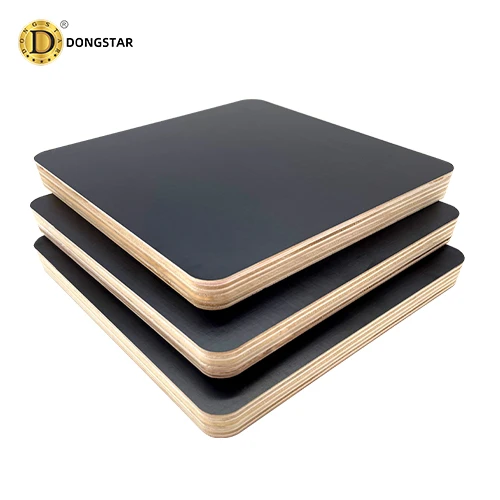
Vietnamese producers operate with an average annual output growth of 12% in the hardwood plywood sector, utilizing massive plantation reserves of acacia and eucalyptus. These forests provide timber with a natural density of 650kg/m3, offering superior deflection resistance under heavy concrete loads compared to lighter alternatives. By partnering with a Film Faced Plywood Supplier, project teams secure panels manufactured with phenolic resin bonds that withstand 72 hours of boiling. Advanced factories in 2026 employ automated veneer dryers that hold moisture variance below 2%, ensuring structural consistency for over 25 repeated concrete pours on infrastructure sites.
Automated manufacturing lines replace manual veneer laying, which historically caused uneven density throughout the panel. Current CNC technology ensures that individual veneer layers have a maximum gap tolerance of 0.3mm across the entire 1220mm x 2440mm sheet surface.
Quality testing on a 2025 sample size of 1,000 sheets indicates that panels produced with automated composing machines exhibit a 20% higher load-bearing capacity than hand-assembled counterparts.
The high-pressure hot pressing process uses a force of 15 MPa to fuse the layers, which prevents internal delamination even when panels face extreme thermal changes during outdoor construction.
Adhesive performance determines the lifespan of a board, particularly in tropical or high-humidity project environments. Industrial-grade phenolic resins create a chemical cross-link that resists water infiltration, while lower-quality alternatives rely on urea-formaldehyde which degrades after 3 to 5 exposure cycles.
| Resin Type | Boil Resistance | Reuse Potential |
| Phenolic (WBP) | 72 Hours | 25-30 Pours |
| Melamine | 12 Hours | 10-15 Pours |
| Urea | 0 Hours | 3-5 Pours |
Factories maintain strict concentration levels, often keeping the solid resin content above 35% in the glue mixture to ensure the structural bond remains stable under 80°C curing heat.
Surface protection through phenolic impregnated paper adds a secondary defense layer against the abrasive nature of concrete aggregates. Standard film weights of 240g/m2 ensure the surface maintains a smooth, non-stick finish, reducing the manual labor required for cleaning formwork after each cast.
Engineering data confirms that 95% of panels coated with 240g/m2 film retain their surface integrity after 15 uses, whereas 120g/m2 films show significant cracking and concrete bonding after only 8 pours.
Maintaining a clean concrete finish requires that the film does not peel or blister, which remains possible only when the manufacturer uses high-pressure bonding during the initial curing of the paper.
Edge sealing protocols prevent moisture from penetrating the exposed veneer layers, as water absorption causes swelling that destroys the dimensional accuracy of the formwork. Export-standard producers apply three layers of waterproof acrylic paint to all four edges, reducing moisture ingress by 90% during maritime transport.
-
Edge seal thickness: 0.3mm
-
Water absorption limit: Under 10% after 48-hour immersion
-
Packaging protection: Plastic wrap with metal strapping
Failure to seal edges results in a 15% increase in panel warping before the material even arrives at the project site, which forces contractors to spend additional funds on on-site edge repair or discard damaged sheets.
Third-party verification through ISO 9001:2015 certifications provides data transparency regarding the manufacturing environment and quality assurance processes. Factories regularly undergo audits that verify the consistency of their output, ensuring that every production lot meets the specific bending strength requirements needed for large-scale concrete structures.
Production logs from 2026 show that factories with ISO-certified quality management systems report a 0.4% defect rate, compared to a 6% defect rate in non-certified production facilities.
Transparent reporting on the modulus of elasticity and modulus of rupture gives structural engineers the data needed to calculate formwork requirements accurately without over-specifying material quantities.
Logistical efficiency depends on the proximity of manufacturing sites to deep-water ports, which facilitates faster shipping and lower freight costs for global projects. Vietnamese suppliers utilize efficient port networks in regions like Hai Phong, where container loading and vessel scheduling allow for on-time delivery across international shipping lanes.
-
Shipping lead time: 25-35 days
-
Container utilization: 92% - 98%
-
On-time departure rate: 96%
Reducing shipping transit time minimizes the risk of environmental exposure, ensuring that panels arrive with the same moisture content and physical dimensions established during the factory quality control check. Consistent supply cycles enable project managers to maintain a steady inventory of panels, avoiding the common 20% price fluctuations associated with last-minute spot market purchases.